


"There is no greater force for change, for peace, for justice and democracy… than a world of empowered women." — Phumzile Mlambo‑Ngcuka
In the quiet corners of communities across Nigeria, women carry the weight of peace on their shoulders. They are mediators in disputes, caregivers in crises, and advocates where systems fail. Their influence often goes unseen, their voices too easily silenced, yet their resilience shapes the rhythms of society itself. Peace, in its truest sense, is nurtured not only in halls of power but also in the grassroots, in homes, markets, and villages where women quietly hold communities together.
For decades, from as early as the mass mobilisation of women during the Aba Women's Riot of 1929, led largely by Igbo market women protesting colonial taxation and abuses of power. Women in Nigeria have stood at the intersection of conflict and resolution, balancing the trauma of violence with the responsibility of sustaining families and communities. Women such as Margaret Ekpo, with peacebuilding evident in her activism, have demonstrated how women could organise communities, challenge injustice, and advocate for inclusive governance.
From the villages of Northern Nigeria to urban centres across the nation, the contributions of women are profound yet, paradoxically, remain undervalued and underrecognised. They are survivors, leaders, and innovators, agents who bridge divides and cultivate understanding even amid insecurity and displacement. Yet, despite their central role, these women often remain excluded from formal peacebuilding processes, their perspectives absent in the decisions that most directly affect their lives.
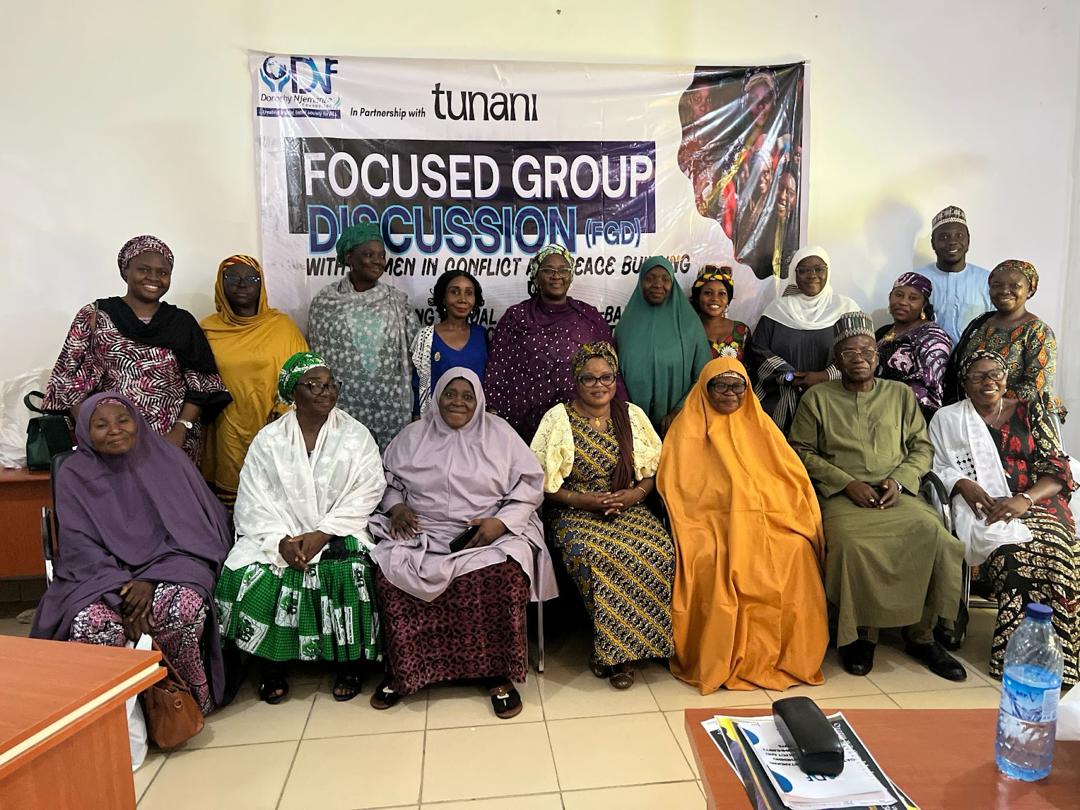
This dynamic was at the heart of the Focus Group Discussion (FGD) on Women, Peacebuilding and Conflict-Related Sexual and Gender-Based Violence (SGBV), organised by Tunani Initiative in partnership with the Dorothy Njemanze Foundation, which took place in Minna on the 17th of September 2025. The focus group discussion, which brought together 21 stakeholders, including community leaders, women advocates, and civil society representatives, offered a space to examine the complex realities women face in conflict, the vital roles women play in peacebuilding, the barriers that silence them, and the strategies that can ensure their full participation in peacebuilding.
Women at the Heart of Peace and Security
Women are the backbone of communities, especially in conflict-affected areas. Participants highlighted that the domestic sphere often serves as the first frontline of peacebuilding. Gwaza Y and Murina M (names changed) shared how women's influence within families can ripple outward, influencing behaviour and encouraging community cohesion. Bala recounted how his mother's insistence on peace at home guided him toward becoming a responsible leader, illustrating the quiet yet profound impact women have on societal structures.
Beyond the household, women-led groups, faith-based organisations, and community-based organisations (CBOs) provide critical grassroots support. Halima described their work in supporting internally displaced persons (IDPs) through emotional support, donations, and advocacy. Meanwhile, women founding NGOs to address SGBV reflect proactive leadership, taking initiative where governmental interventions are slow or absent. Mediation and advocacy, often carried out by women, demonstrate a natural aptitude for restoring harmony, even in tense and dangerous situations.
How different would our communities be if women's leadership in peacebuilding were not the exception but the norm?
The Disproportionate Burden of Conflict
While women contribute immensely to peace, they also bear its heaviest costs. Displacement, trauma, and GBV disproportionately affect women, particularly in conflict-affected states like Niger State, where bandit attacks and insurgencies have uprooted countless families. Hala, Salah, and Bagu recounted stories of women left behind as men fled, forced to navigate survival under dire circumstances. Heartbreaking accounts included women losing children during forced treks to safety and survivors of sexual violence struggling to access justice.
Mrs Y shared a story of a hearing- and speech-impaired pregnant woman who lost both her baby and her womb due to communication barriers in a hospital, a stark reminder that conflict's impact is compounded by structural gaps in services and support. Azizat emphasised that mental health services for women survivors are largely absent, highlighting the urgent need for interventions that address trauma as part of recovery and peacebuilding efforts.
If women bear the heaviest burdens of conflict, what are we doing to ensure they are not left to shoulder them alone?
Barriers to Women's Participation
The FGD participants identified entrenched patriarchal norms and harmful cultural practices as major barriers to women's full engagement in peacebuilding and civic life. Sadia, a CSO leader, noted that societal assumptions about women being "weak and irrational" continue to exclude them from decision-making processes. Harmful practices such as child marriage, wife inheritance, and restrictions on women's participation in community meetings further limit their agency.
Additionally, lack of unity among women and systemic exclusion perpetuate marginalisation. Participants pointed out that women often fail to support one another in leadership and political spheres, while positions intended for women may be co-opted by men for political gain.
How can communities thrive when half of their voices are excluded from shaping the peace they live under?
Recommendations: Building Inclusive Peace
Participants offered actionable recommendations to ensure women are empowered as agents of peacebuilding:
Inclusion at All Levels: Women must be represented in decision-making from grassroots to top leadership. Traditional leaders and government officials were urged to create spaces that actively involve women.
Building Unity and Collective Action: Women should support one another and form networks to amplify their voices. Collaboration, not competition, is key to collective empowerment.
Education and Capacity Building: Educating women was emphasised as a long-term strategy for sustainable influence. Participants advocated for programmes that equip women with leadership and decision-making skills.
Advocacy and Systemic Change: There is a pressing need to challenge harmful norms, legislate women's rights, and ensure SGBV cases are handled through formal justice systems, including police intervention and legal recourse.
As a nation, what steps can we take — together with grassroots communities, leaders, and institutions — to bring these recommendations to life?
Looking Ahead
The FGD underlines a defining truth: women are not merely victims of conflict; they are powerful architects of peace. Yet, without deliberate efforts to address structural, cultural, and systemic barriers, their contributions will remain undervalued and underutilised. As the voices from Niger State remind us, peace begins with listening to women, amplifying their perspectives, and creating spaces where they can lead with authority, empathy, and courage.
Just as Ellen Johnson Sirleaf, former President of Liberia and Nobel Peace Prize winner, once urged, "To my sisters, my daughters, my friends: find your voice," women in conflict-affected regions of Nigeria carry the weight of peace on their shoulders. They mediate disputes, care for families, and advocate for justice where systems fail. Their voices should be valued and strengthen the very fabric of our society.
