


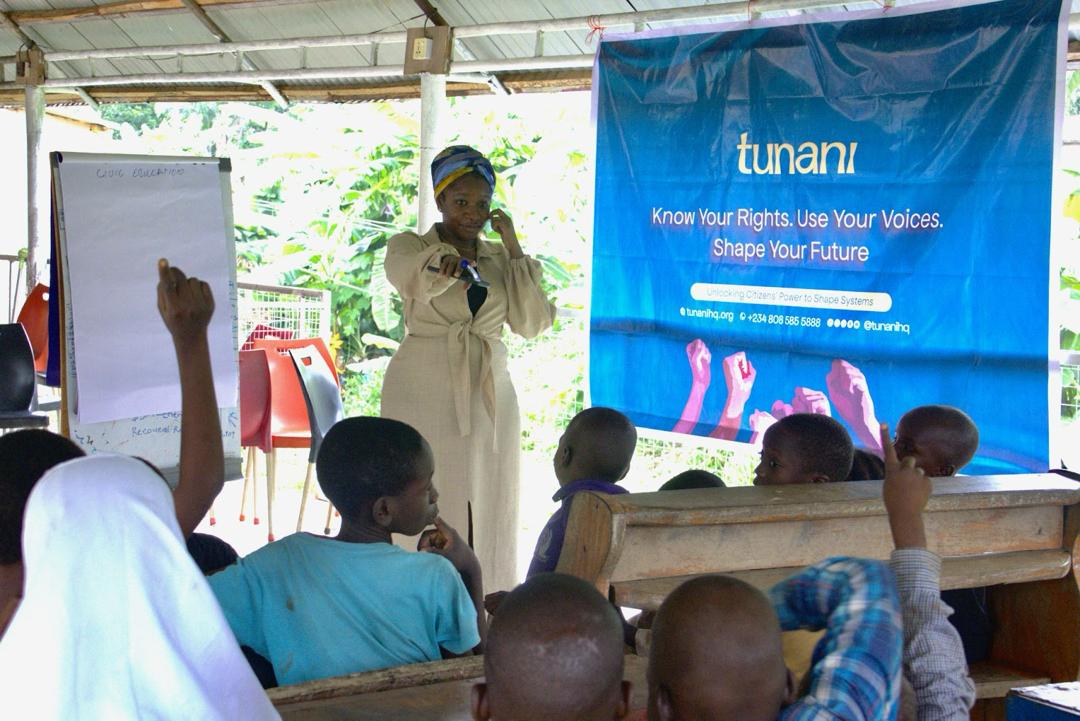
On a warm afternoon in Abuja, a group of children sat in a circle around colorful flipcharts and cardboard learning boards. Some were curious, some shy and a few were excited just to be part of the activity. Most of them had never heard the words "civic education." Yet within a few hours, they would begin to understand something powerful: that they are part of a community and that their voices matter within it.
This moment was part of the Evergreen Project Tutored Programme, where the Tunani Initiative facilitated a civic education learning session for disadvantaged children aged between four and twelve. What started as a simple teaching activity soon became a reminder of why civic education must begin early. Because building responsible citizens does not start in adulthood. It starts with children.
Why Civic Education Matters for Young People
When we talk about governance, democracy, or citizen participation, the conversation often focuses on adults. Elections, political debates and public policy discussions usually seem far removed from the lives of children. But the foundation of active citizenship begins much earlier.
Children who understand their rights, responsibilities and communities are more likely to grow into engaged citizens who contribute positively to society. Unfortunately, many young people, especially those from disadvantaged backgrounds have little exposure to civic education. Without that exposure, important concepts such as citizenship, community responsibility and governance remain abstract or unfamiliar. The session at the Evergreen Project Tutored Programme aimed to bridge that gap.
Starting With a Simple Question
Before the lesson began, the facilitators from Tunani Initiative conducted a quick pre session evaluation. They asked the children simple questions: Who is a citizen? What is a community? How many levels of government exist in Nigeria?
The responses revealed an important insight. Only a handful of the children could answer confidently. Most had never encountered these ideas before. This was not surprising. Civic education is often introduced later in formal schooling and for many disadvantaged children, even access to structured learning opportunities can be limited. But rather than seeing this as a challenge, the facilitators saw it as an opportunity. If these children could understand civic values early, they would carry that knowledge for the rest of their lives.
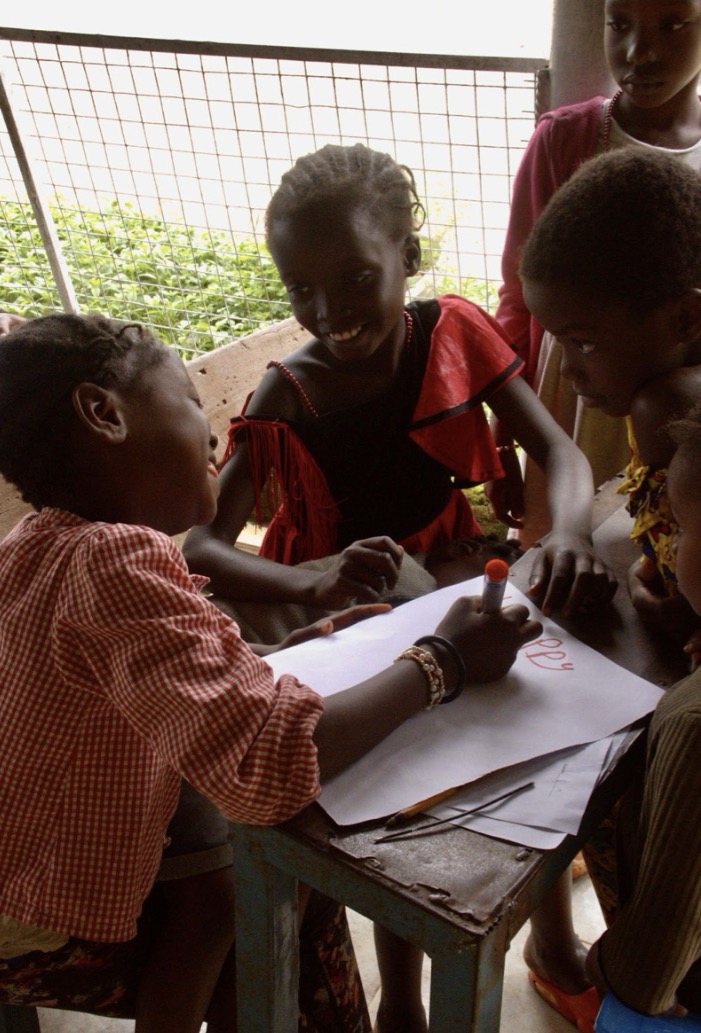
Facilitators using flipcharts and cardboard learning boards during the session.
Learning Through Play and Participation
To make the session engaging, the team used simple but effective teaching tools, flipcharts illustrated ideas visually, cardboards were used for interactive demonstrations, children were encouraged to ask questions, share ideas and participate in discussions.
Instead of long lectures, the session relied on storytelling, examples from everyday life and simple explanations. The children were asked questions like: What makes a good member of a community? How can we help keep our environment clean? What does it mean to respect others?
These questions helped connect civic ideas to real life. Gradually, the children began to respond more confidently. They talked about helping neighbors, respecting rules, keeping their surroundings clean and supporting others in their community. For many of them, it was the first time they had considered their role within a larger society.
The Moment Understanding Clicked
At the end of the session, another quick evaluation was conducted to see what the children had learned. The difference was clear. More participants were now able to explain who a citizen is. Some could identify the three tiers of government. Others suggested simple ways they could contribute to making their communities better.
The shift may have seemed small, but it was significant. In just one session, the children had moved from limited awareness to a basic understanding of civic responsibility. More importantly, they showed curiosity about the topic. They wanted to learn more.
In just one session, the children had moved from limited awareness to a basic understanding of civic responsibility. More importantly, they showed curiosity about the topic. They wanted to learn more.
Beyond the Classroom
The session involved more than just teaching children. It also brought together educators, volunteers and the Tunani Initiative team in a collaborative effort to promote civic awareness. The activity was facilitated by a small team from Tunani Initiative, supported by school teachers who helped coordinate and manage the children. Altogether, over forty eight children participated in the learning session.
For Tunani Initiative, the program also reinforced its mission as a youth-led organization committed to promoting civic education and social awareness. But the most meaningful impact was not measured in numbers, it was reflected in the enthusiasm of the children as they discussed what they had learned.
Lessons From the Experience
The session also offered important lessons for future programs. One key observation was the importance of understanding the target audience beforehand. Knowing the age group, background and learning level of participants helps facilitators design materials that better match their needs.
The team also noted the importance of clearly assigning roles among facilitators to ensure smoother coordination during activities. Another major insight was the need for sustained civic education efforts. Many of the children had never previously encountered civic concepts. This highlights a wider gap that requires continuous engagement rather than one time interventions. Civic education must be consistent to truly shape attitudes and behaviors.
Planting Seeds for the Future
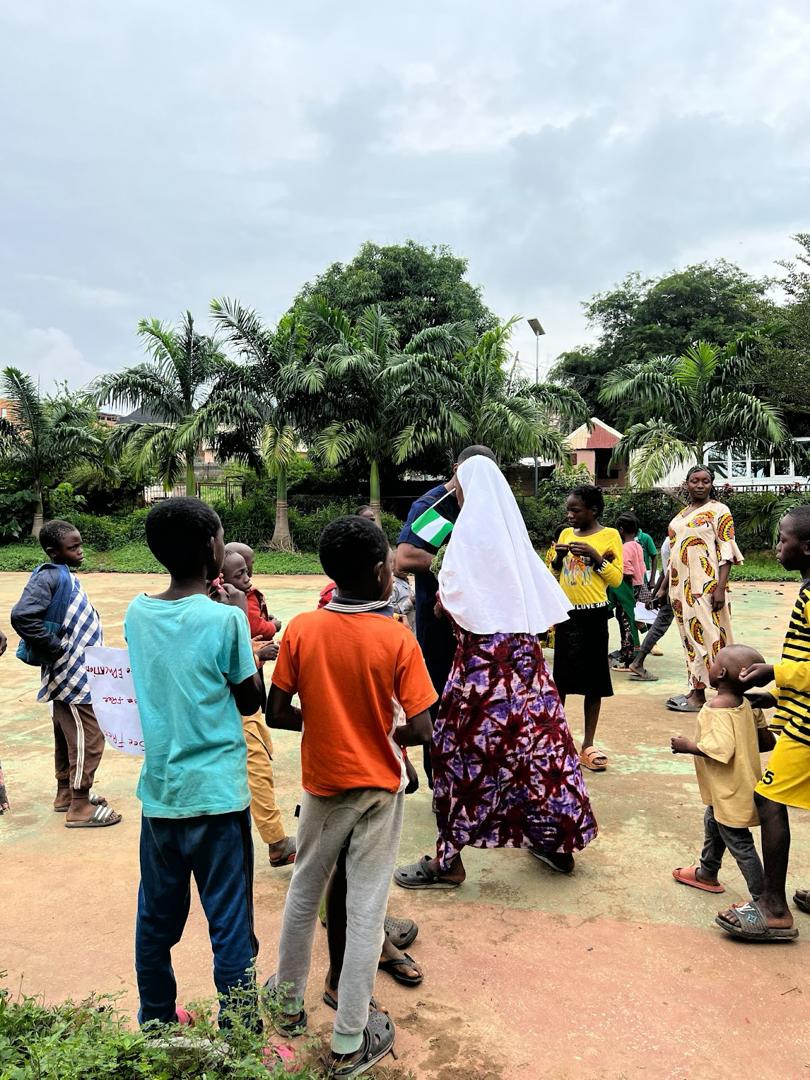
The children who attended the Evergreen Project Tutored Programme may still be years away from voting in elections or participating in formal civic processes, that does not mean they are too young to learn about citizenship. Understanding community responsibility, respect for others and the importance of participation begins long before adulthood.
Moments like the civic education session in Abuja plant those early seeds. They help children see themselves not just as students, but as members of a community who can make a difference. And sometimes, all it takes to start that journey is a simple question: "What does it mean to be a citizen?"
